

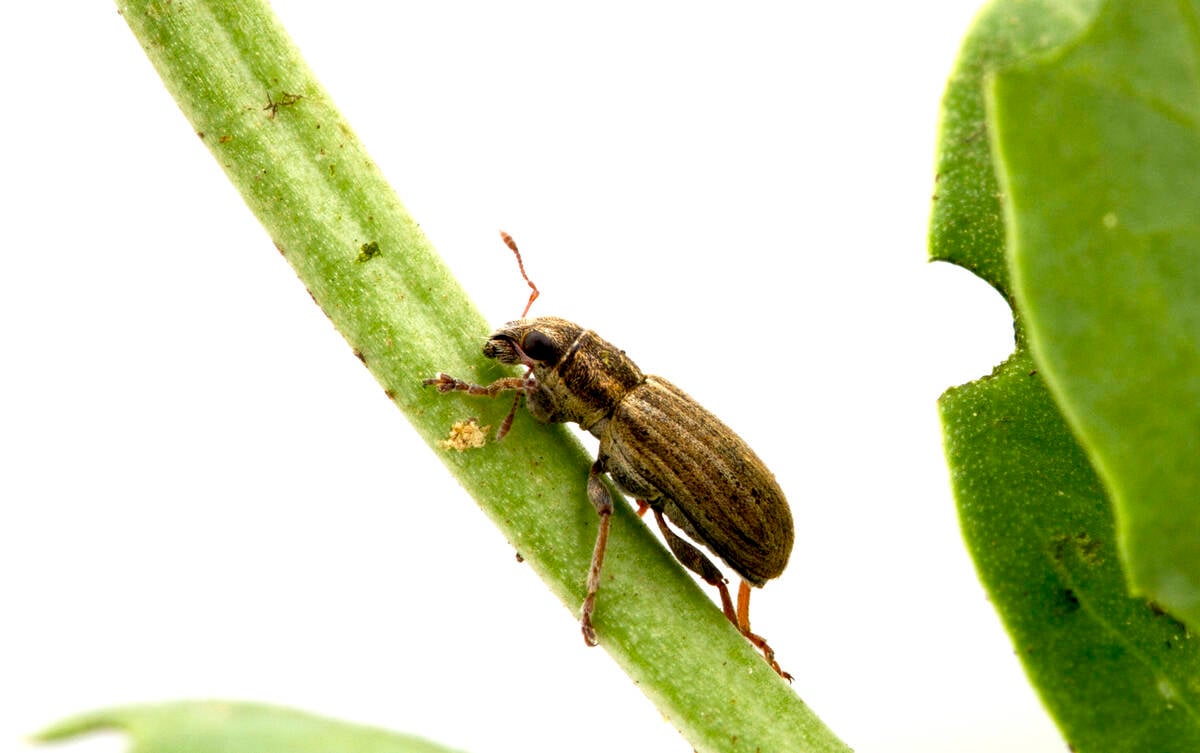
The pea leaf weevil is an invasive species that has slowly moved from southern Alberta to the province’s north, said Amanda Jorgensen, insect pest management specialist with Alberta Agriculture and Irrigation.
The pests were first found in Lethbridge, but can now be found throughout the province.
“Historically, it was more of an economic issue in southern Alberta, but we do see higher populations in central Alberta and the Edmonton area. We’re still trying to tease apart the relationship between yield losses in central and northern Alberta,” said Jorgensen.
Read Also
Liver abscesses in cattle cost producers millions each year
Research points to rising costs as cattle spend more days on feed.
WHY IT MATTERS: With the right conditions, the pea leaf weevil can cause significant yield losses in pulse crops, especially field peas and faba beans.
Hector Carcamo, entomologist at Agriculture and Agri-food Canada in Lethbridge, said the pea leaf weevil made its way to the west coast in Canada in the 1930s, was discovered on the Canadian Prairies in the 1990s and has been moving east ever since.
This is the first year the pea leaf weevil has been a problem in Manitoba.
“We’ve seen a lot of damage in central Manitoba,” said Carcamo, at an Alberta Pulse Growers regional meeting in Taber.
Reproduction
The insects can feed on field peas, faba beans, lentils and beans, but can only reproduce on peas and faba beans.
The pea leaf weevil produces one generation per year.
Females lay about 1,000 to 1,500 eggs in the soil. The pea leaf weevil tends to have more of an impact on faba beans. However, there are fewer faba beans in the province, so the Alberta Agriculture and Irrigation, Plant and Bee Health Surveillance section staff concentrates their surveys on peas.
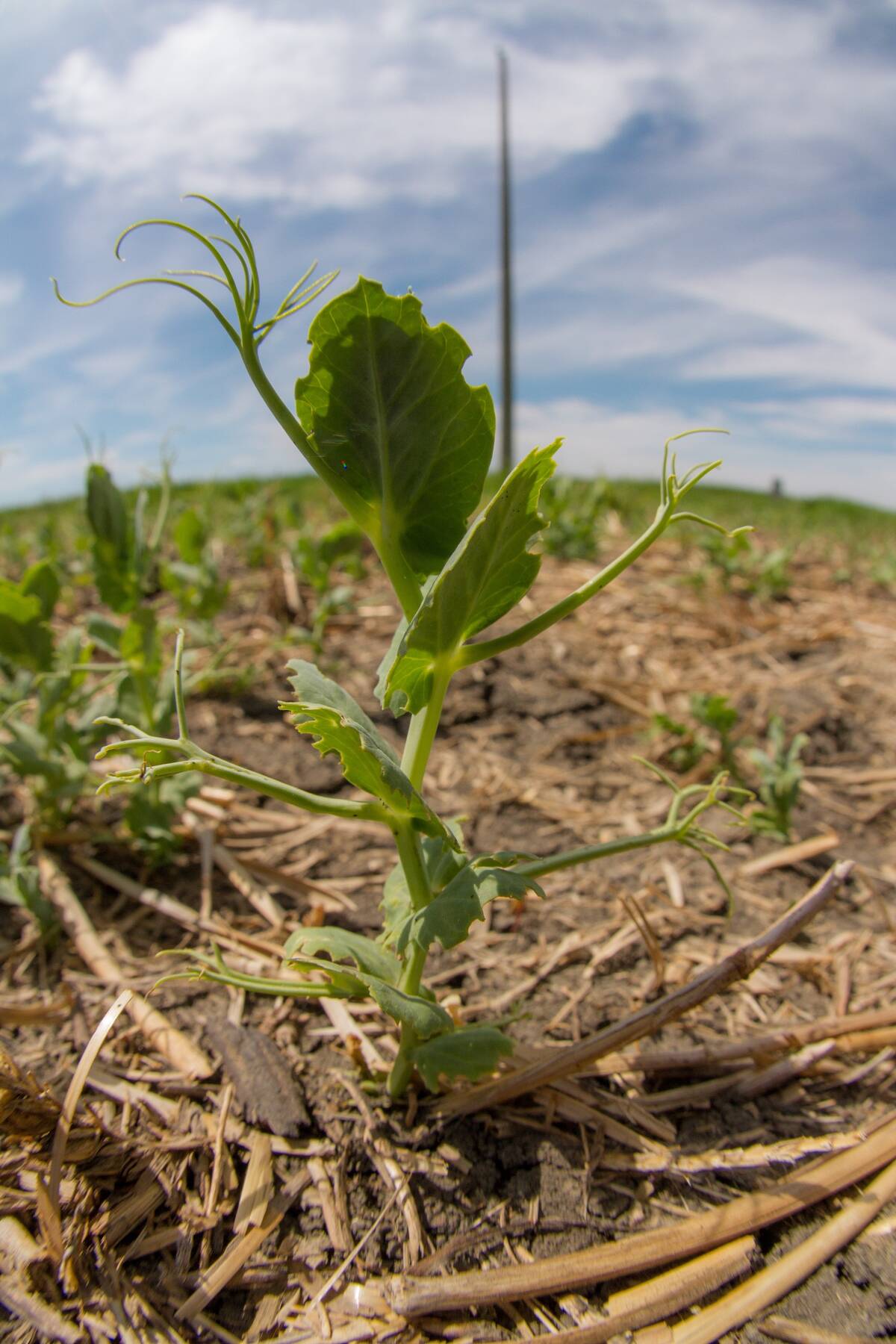
“Adults will feed on leaves, which is a nice way for us to scout for their presence, looking for those distinct notches. But that notching usually isn’t economic unless you have so many weevils that there’s not much plant left, which does not happen very often,” said Jorgensen.
The pea leaf weevils find areas with thick residue and perennial forage crops like alfalfa to spend the winter.
The weevils can overwinter as adult beetles and start feeding on non-reproductive plant hosts.
“That’s just an adult feeding. It’s not necessarily an economic concern,” said Jorgensen.
Weevils arrive early in pea fields in warm temperatures above 20 C. If the weather stays around that temperature for more than a few days in late April or early May, that may correspond with higher pea yield losses. If the weather is cool during the same period, pea yield is generally not as compromised.
New adults may emerge later in the growing season in late July through August, and search for any pulse crop to continue feeding before overwintering.
In March or April, they emerge from hibernation and start looking for any plant in the bean family to feed on before laying eggs from May through July.
“They really want to find the field peas and faba beans. There is something that gets them in a romantic mood when they find field peas and faba beans. They start thinking about mating and laying eggs,” said Carcamo.
“Even if they find alfalfa, they will not lay as many eggs in a field of alfalfa.”
Identification
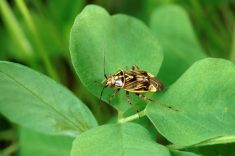
The adult pea leaf weevil is slender, greyish brown and about five-millimetres long. They can be identified by the presence of three light-coloured stripes extending lengthwise down the thorax and the abdomen.
The larvae are C-shaped, light milky white in colour, with a dark brown head. They have no legs and are cylindrical, soft and fleshy. They are about 3.5 to 5.5 mm in length.
Economic loss
Weevils will move from alfalfa or another legume to a faba bean or pea field. They feed on faba beans and pea fields and start mating and laying eggs in the soil. The pupae emerge as adults towards the end of August and then start feeding on nodules, which causes the economic losses.
When larvae feed on root nodules, there is decreased nodulation, as well as a decrease in the amount of nitrogen that peas or faba beans are going to be able to produce.
“That’s really where our yield impact comes,” Jorgensen said.
“Sometimes the relationship between the number of weevils and the yield isn’t as clear cut, because of all the different agronomic factors that could impact the amount of nitrogen that’s already in the field. The amount of moisture the plant is getting is going to impact how that reduced ability to produce nitrogen is going to impact yield.”
Moving north
The pea leaf weevil has made its way to the Peace Country, and there is a hotspot in Saddle Hills County northwest of Grande Prairie. But there are still low levels of insects in that area.
“We did see a population increase, so we’re keeping an eye on it,” said Jorgensen.
The pea leaf weevil is most found in pea fields south of Highway 1, with density of the insect and resulting damage increasing towards Lethbridge.
“We recommend producers pay attention to what they’ve seen in their own fields in terms of yield impact, because this year, we saw high numbers of pea leaf weevil in the central and Edmonton area, but we don’t have any people reporting yield losses,” said Jorgensen.
Overwintering
The pea leaf weevil needs moisture to develop. They need a good snow cover or mild winter to survive.
“If we have a harsh, cold winter with low snow cover, then a lot of weevils are going to die over the winter, and if they don’t have the best moisture conditions over the summer, they will persist but won’t do as great,” said Jorgensen.
If moisture conditions are good, that will often help plants compensate for the damage.
Pest management
If producers see pea leaf weevil consistently in their area, seed treatments are the best solution, Jorgensen said.
“There are foliar insecticides that are registered for pea leaf weevil, but we’re finding more that they really do not decrease yield impacts from pea leaf weevil. Pea leaf weevil has a long emergence period for adults to be active.”
In areas that consistently have pea leaf weevil issues, using a registered seed treatment is one of the best things a grower can do.
Growers should keep track of yield issues and decide to see if treated seed is worthwhile for their farm.
“It’s worth noticing whether they have had any yield issues, and to make that decision whether using a treated seed is worthwhile for them specifically,” Jorgensen said.
The 2025 survey was conducted by Alberta Agriculture staff who stop at random pea fields and visit producers who have called. The survey for pea leaf weevil is conducted during the spring.
“We really appreciate the volunteers, because we have random sampling fields that we see driving by between the four and six node stage. It’s hard to track a pea field at that height, so we always appreciate people letting us know where we can find them,” they said.
The team surveys by counting the number of U-shaped notches on the leaves.
When the surveillance team has their information about what they saw in the spring last year, it’s still helpful for producers to make their own decisions about what they want to do in the field, they said.
The survey is helpful for making decisions, but it doesn’t necessarily reflect what will happen after overwintering conditions.
Unfortunately, pea leaf weevil is an insect that growers cannot spray for.
“There are foliar insecticides that are registered for pea leaf weevil, but we’re finding more and more that they do not decrease yield impacts from pea leaf weevil, because pea leaf weevil has a long emergence period for those adults to be active,” they said.
A foliar application is going to miss a good portion of adults, and they will still lay enough eggs that there could be a yield issue.