

Alberta’s government recently announced new rules around water storage and conservation. The new and expanded Water Act exemptions will increase water availability, improve conservation, support agricultural producers and help protect communities from future water emergencies.
Farmers, ranchers, communities, businesses and emergency responders can all make use of these new exemptions.
WHY IT MATTERS: Farmers can mitigate the effects of prolonged drought conditions with increased water storage capacity.
Read Also

From soil to stall: the digital platform closing the data gap in methane reduction
Maxime Leduc’s ‘My Forage System’ helps livestock producers boost profitability and slash emissions by finally connecting field data to animal performance.
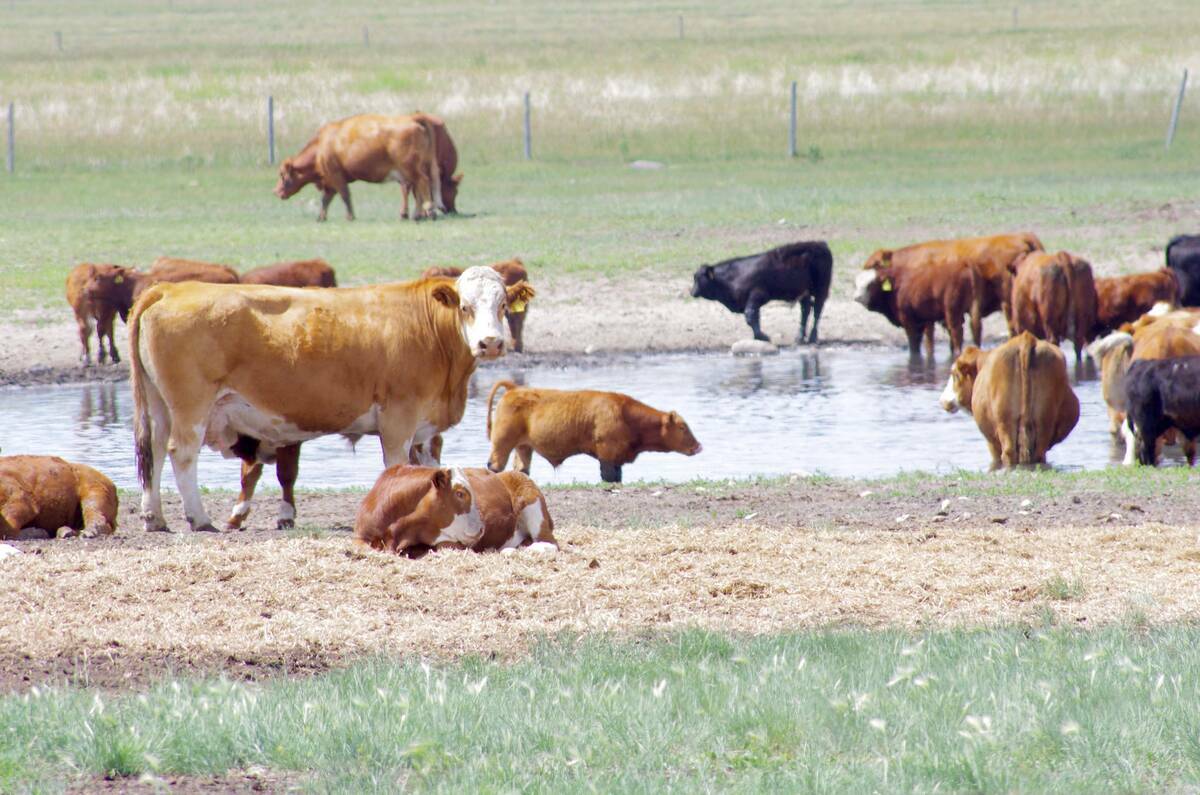
Currently, many dugouts are too small to capture available water because of a 2,500-cubic-metre exemption limit. As of January 20, farmers and ranchers can fill their dugouts up to 7,500 cubic metres, provided the water is used for agricultural purposes. This change helps protect farmers from future droughts and supports agricultural operations.
Alberta’s government is also making it easier for communities and businesses to use less fresh water by using stormwater instead. Under the new exemption, a newly constructed wetland will be able to capture up to 7,500 cubic metres of local surface runoff per year. That’s a 1,250-cubic-metre increase from the previous limit, which will support more wetlands across the province.
Other changes to the Water Act make it easier to use water for bridge, sign washing and dust control. Another advantage will be the ability to access water from borrow pits on unoccupied public land in the Green Area, provided there are no fish present and no connection to a wetland or watercourse.
Up to 100 cubic metres can be used for bridge, sign washing and dust control.
As demand for water increases across the province, the water management system will be modernized to ensure the province can meet challenges.
Up to 100 cubic metres per source per day can be used for fire prevention and training activities related to firefighting and spill response. (Water used for active firefighting has long been exempt under the Water Act.)
Annual use of stormwater ponds up to 7,500 cubic metres with an outflow, or up to 15,000 cubic metres with no outflow are now exempt from licensing requirements.
The exemption for water use by temporary camps has increased to 2,500 cubic metres per year.