
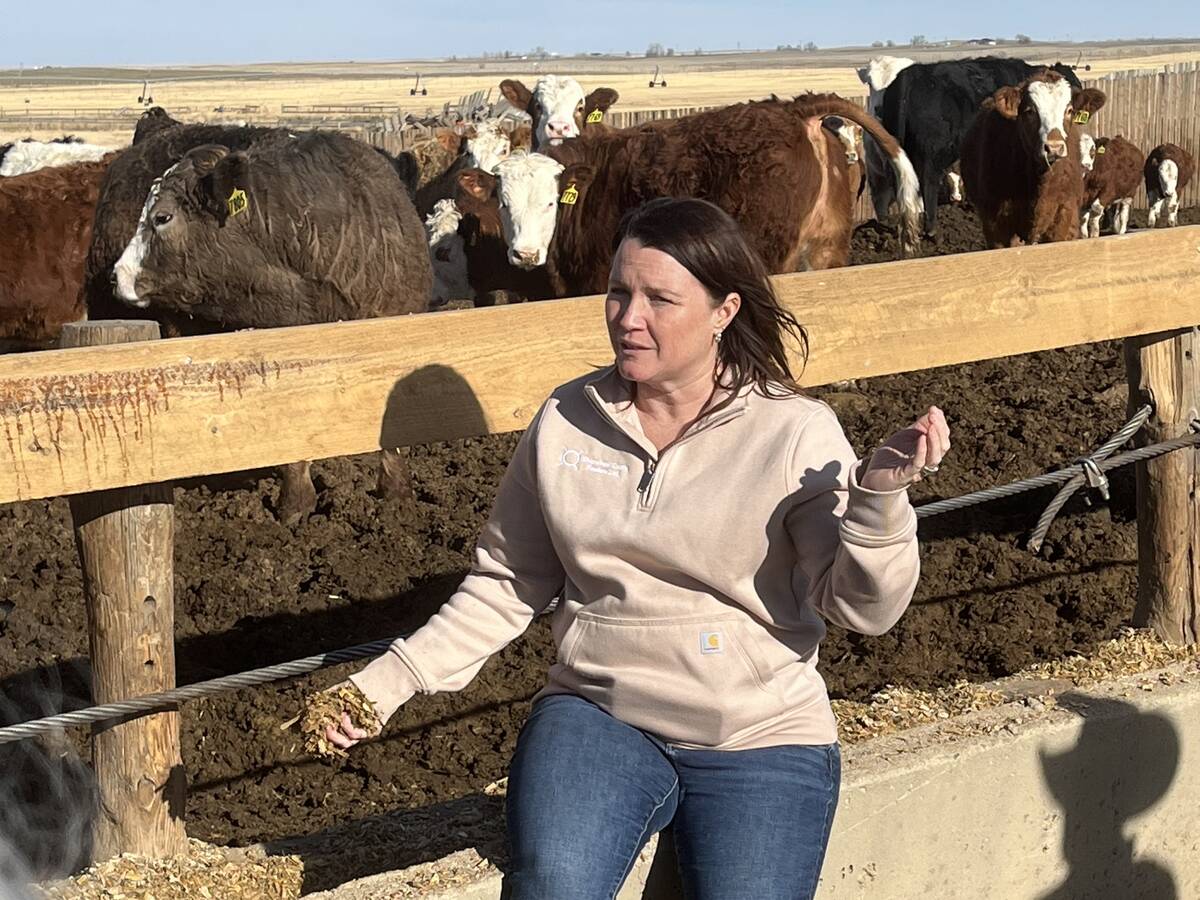
Shipwheel Cattle Feeders just north of Taber, Alta., is one of the pioneers in Canada to adopt the principles found with holistic management.
Their operation was on full display to kick off the 2026 Holistic Management Conference, as it has been a 50-year journey transitioning from continuous grazing to rotational (adaptive multi-paddock), along with an extra emphasis on proper stockmanship.
Andrea Stroeve-Sawa’s great grandfather Albert made his way from Sweden on the Romeo at age 14 years to escape the European potato famine in the mid-1800s. Working hard for more than a decade, he eventually would buy livestock with the brand Shipwheel, which started with humble beginnings to become the operation it is today.
Read Also

Highwood MLA RJ Sigurdson survives recall attempt
Ag Minister RJ Sigurdson survives recall attempt in Highwood after the constituent-led petition fails to meet signature threshold.
WHY IT MATTERS: Shipwheel Cattle Feeders is a case study in Canada where holistic regenerative practices can be financially successful in running an agricultural operation.
The cattle of today are treated under the guidance of Andrea’s father, Blake Holtman, who was introduced to holistic management practices he encountered at a conference in the early 1980s in Albuquerque, N.M., with guest speaker Allan Savory from South Africa.
“I was very blessed to be born into a place that was already taking on holistic management decisions. I joke with people that I kind of learned holistic management by osmosis,” said Stroeve-Sawa, prior to a producer tour.
Andrea showed a slide of land in rough shape, stocking cattle at 2.36 animal days per acre in 1982, showing its progression to rotational grazing (adaptive multi-paddock) instead of continuous.
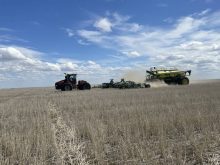
Context matters with the southern Alberta area featuring very sandy soil, with droughts and high winds eroding the soil in the brittle environment. The area struggled at first with kochia propping up, as Andrea’s father returned to Savory for guidance to inquire what he was doing wrong. It was not a mineral or water cycle problem, but rather bringing more animals into the equation.
“Allan just kind of chuckled and said you have a succession problem, you need more animals. (My Dad) nearly fell off his chair. He said, I don’t know how to do that many animals. He didn’t have enough money to buy the animals, so we got partnered with a customer, and he put cattle on and went to 800-head. Once they increased the animals, that’s when the changes really started to happen,” said Stroeve-Sawa.
“Grass is starting to come in, that was right after they had increased to 800 animals. Keep in mind that was in 1987, so completely unheard of.”
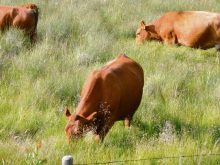
The ranch went from 2.36 stock days/ac. to 93.5 stock days/ac. in 2015 in the area, making for an 3,862 per cent increase in three decades.
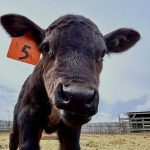
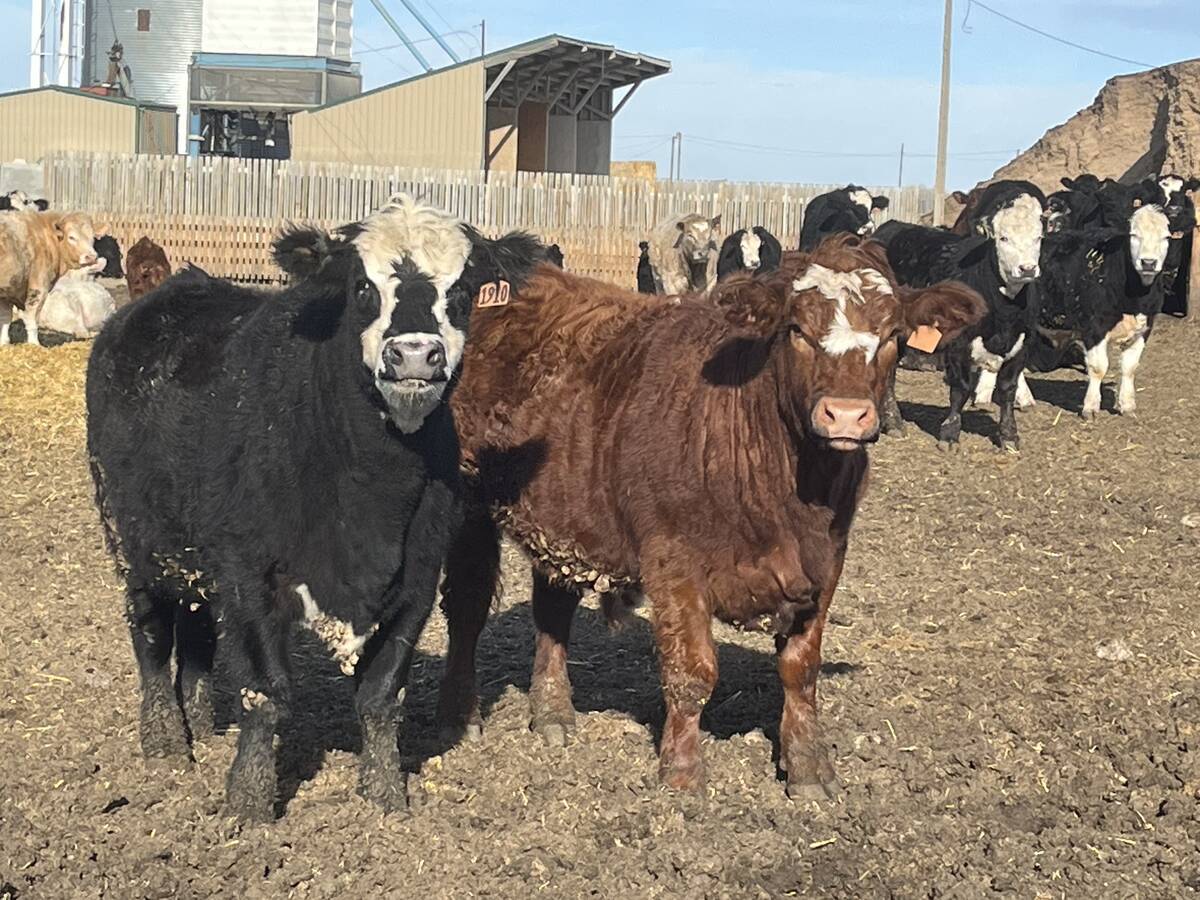
Those extra cattle are tended to with more loving care and with proper low-stress stockmanship for their mental health, which has been proven to aid their physical health. It involved forgoing antibiotics in the natural program that was used at one time, before more traditional methods now. When the natural cattle were fed, Stroeve-Sawa sighted 0.5 per cent death loss on the heifers, with steers at one per cent. For the animals who got sick and were treated, four per cent of heifers were treated with eight per cent of steers on 4,435-head.
Low-stress stockmanship involves handling with a focus on health, learning pressure and release, making for herd confidence in its surroundings. Staff do between 30-40 hours of continuous training, handling the cattle in how to stop, turn, slow down and speed up in a relaxed state of mind travelling in herds and alone.
An incidence of a new arrival of cattle at 2:30 a.m. was filmed at 8:30 a.m. and then again at 4:30 p.m. the same day after tending to the herd using proper stockmanship for the day. Early in the morning, zombie-like frantic pacing looking for their mothers with non-strop mooing turned to minimal noise and relaxed unified movement.
“Our goal when we first get arrivals like that is to have them rest, nourishment, and confidence,” said Stroeve-Sawa.
“A key for rest is to have them bedded down and when they tuck their heads right in, that’s the sign they are decreasing cortisol. Even in humans, if we increase stress in the body, it increases cortisol, which decreases the immune system, which also increases stress which re-releases more cortisol. Our whole goal when we have newly arrived calves is to stop that negative cycle of stress, and we do it using proper stockmanship.”
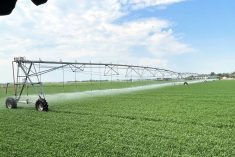
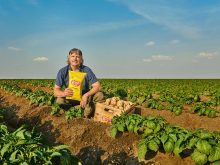
Depending on number of cattle and winter conditions, Shipwheel Feeders averages about 10,000 tonnes of compost to sell to farmers for their high-value crops of potatoes, pumpkins, corn, sugar beets and onions in the southern Alberta area.
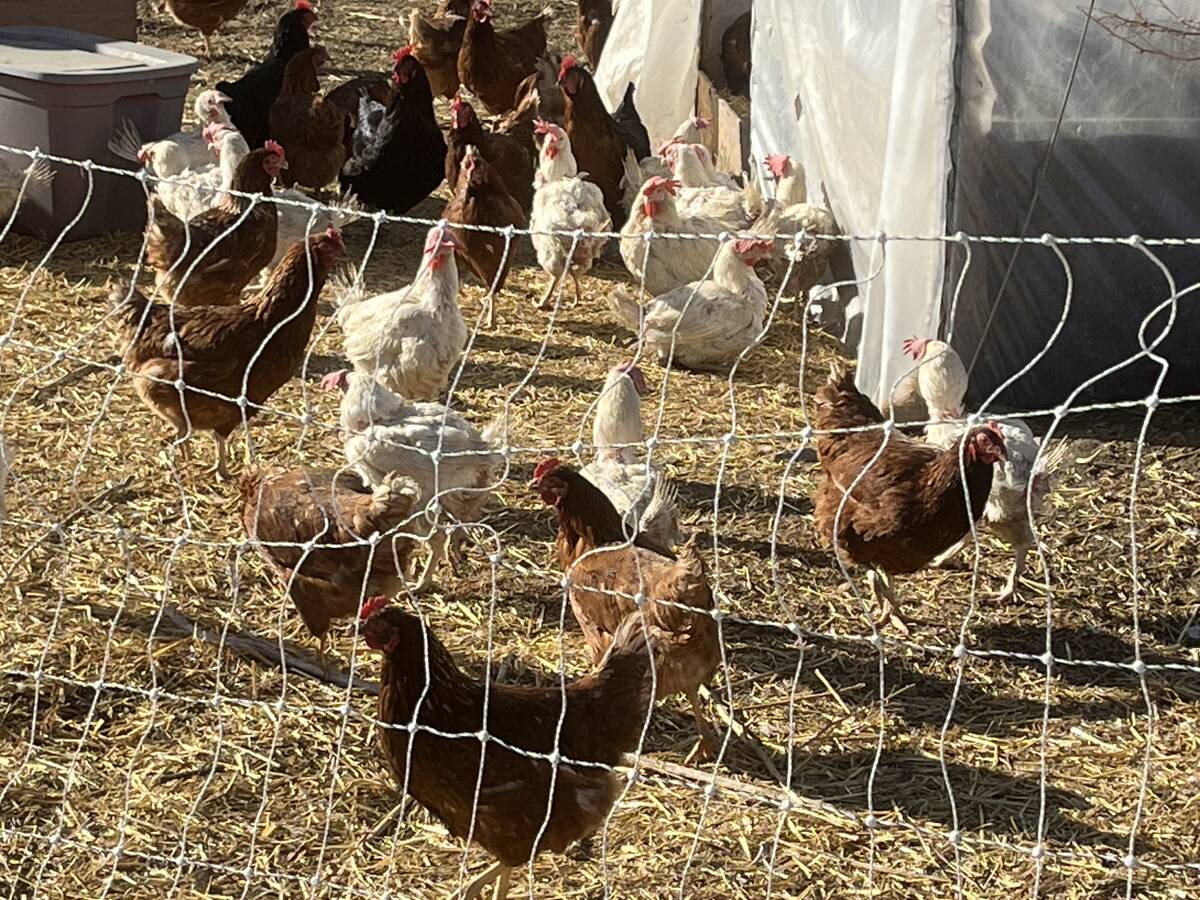
When COVID hit, Shipwheel was afraid of the strain in how to manage its operations through a pandemic, and looked for alternate revenue streams to keep it afloat. It led to the birth of the Green Mercantile, an on-farm store where the system meets the community. It sells Shipwheel’s pasture-raised eggs, compost and beef products to go along with 30 different Canadian entrepreneurs who make everything from jam to barbecue sauce.
“It’s been a really great blessing for me to be able to work with my dad. I think a big part of how Dad and I work well together is that we both have an understanding of the goal and what I value and what he values, and we both respect that,” said Stroeve-Sawa, adding holistic measures have been used in an operation that has increased its land holdings by about 3,000 per cent over the years according to Andrea.
“It has been a lot easier to bring the now fifth generation in with that understanding already. “
Shipwheel Cattle Feeders case study takeaways
- Succession through density: After struggling with soil erosion and weeds, the operation shifted from continuous grazing to a high-density rotational system. By increasing animal presence, they moved from 2.36 to 93.5 stock days per acre — a 3,862 per cent increase in productivity.
- The power of ‘stockmanship’: The ranch prioritizes low-stress handling to lower cortisol levels in cattle. This mental-health focus translates to physical health, resulting in remarkably low death losses (0.5 per cent–1 per cent) and reduced reliance on antibiotics.
- Financial viability of regeneration: Shipwheel serves as a primary Canadian case study proving that holistic practices are not just environmental — they’re financially successful, allowing the operation to expand its land holdings by 3,000 per cent over several decades.
- Revenue diversification: To build resilience against market shocks like the COVID pandemic, the ranch branched out into selling high-value compost (averaging 10,000 tonnes annually) and launching the Green Mercantile, an on-farm store supporting 30 Canadian entrepreneurs.
- Generational osmosis: The transition to a fifth generation of farmers is facilitated by a shared holistic framework, ensuring that values regarding land health and animal welfare are respected across age gaps.