

The huge cuts to agricultural research at Agriculture Canada are being widely panned by farm organizations across the country. Unfortunately, there seems to be little hope of the government reversing its decision.
Yes, the federal government must find ways to cut spending and yes, the number of civil service employees has ballooned over the years.
However, that expansion has bypassed Agriculture Canada research for many decades. Instead, research programs have long been cut and employment levels have dwindled.
Read Also

With the world at war, you may need a Bunny Hug
Much of the world is in turmoil, but a couple Prairie farmers are keeping things down to earth with their Bunny Hug Farmers podcast.
This has occurred despite ever-increasing research dollars from producer check-off programs.
Now, 665 positions, 12 per cent of the employee base, will be cut along with the complete closure of many research facilities across the country.
Keith Downey, one of the co-founders of canola, recently had his 99th birthday. His work in the 1960s and 1970s at Agriculture Canada in Saskatoon was instrumental in turning rapeseed into canola, which has become Canada’s most important crop.
Downey’s work occurred well before the establishment of farm commodity groups with producer check-off funds contributing to research.
Some research programs proceed for years or even decades without much to show for the effort, but the mega success of canola shows why investment in research can pay off handsomely.
Analysts point to the slow growth of productivity in Canadian industries, including agriculture. You don’t increase productivity by cutting research programs.
As the axe falls on Agriculture Canada, big questions need to be resolved:
- What programs are being entirely eliminated?
- What will happen to the land base at closed facilities such as Lacombe, Alta., Scott and Indian Head in Saskatchewan and Portage la Prairie, Man.?
- Will applied research institutions separate from Agriculture Canada continue to have access to the land and any equipment they may have shared?
- What about all the research agreements with farm commodity groups, the Western Grains Research Foundation and even provincial governments?
- Will widespread crop variety trials still be possible to get enough data for registration?
Considering the bureaucracy that governs Agriculture Canada, answers to all these questions will likely be slow to materialize.
While farm organizations are raising the alarm and the cuts are receiving attention in agricultural media, this isn’t a story that resonates with mainstream media outlets.
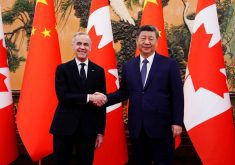
Mainstream media eventually caught on to the importance of removing Chinese tariffs on canola, but they won’t pay much attention to research cuts with all the other news happening in Canada and around the world.
Farmers will quickly move on as well.
Producers involved with commodity groups and those who take an active interest in the research programs will continue to decry the malaise created at Agriculture Canada, but the cuts don’t affect the day-to-day lives of most farmers in the near term.
Farm commodity groups commit most of their dollars to research, but they don’t have the additional resources to counter what the government is cutting.
If a significant portion of government money currently devoted to business risk management programs was diverted to research, the Agriculture Canada cuts could be nullified. In the long term, this would probably prove to be a superior investment.
However, most farmers would not accept less government money and therefore reduced support under AgriInsurance (crop insurance), AgriInvest and AgriStability, so that idea isn’t even on the table.
Consultations have started for the next federal-provincial ag policy framework, and farm organizations will be pushing for safety net improvements.
The Agriculture Canada cuts are a bad policy decision, but there won’t be much of a political cost for the federal Liberal government.
Kevin Hursh is an agricultural journalist, consultant and farmer. He can be reached by e-mail at [email protected].