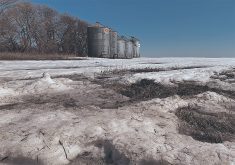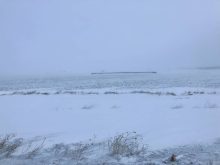

Moderate temperatures South Dakota-style winter may have compensated for the lack of snow cover
The Prairie winter wheat crop may have been left looking a bit worse for wear due to unusually low snowfall cover, but there’s still life lurking below those browned-off stalks.
That’s because it takes more than just a tap on the head to kill winter wheat, said Outlook, Sask.-area farmer Dale Hicks, who is also chair of the Saskatchewan Winter Cereals Development Commission.
“There’s going to be damage on headlands and hilltops, but we’re not going to experience wall-to-wall death. That’s impossible,” said Hicks, on the sidelines of a workshop hosted by Manitoba Winter Cereals Inc.
Read Also
Weather whiplash: Alberta saw best and worst of winter this year
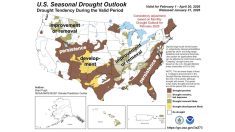
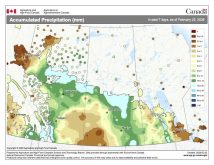
Prairie precipitation fell short of average this winter everywhere but Calgary, raising questions heading into seeding.
It takes at least 30 skull-shattering whacks, or more accurately, incidents of severe frost, to push the crown tissue over the “line of death.”
Even without good snow cover, Hicks pegs the number of “damage events” on the Prairie crop’s Winter Survival Model at only five so far this winter during cold snaps in January and February.
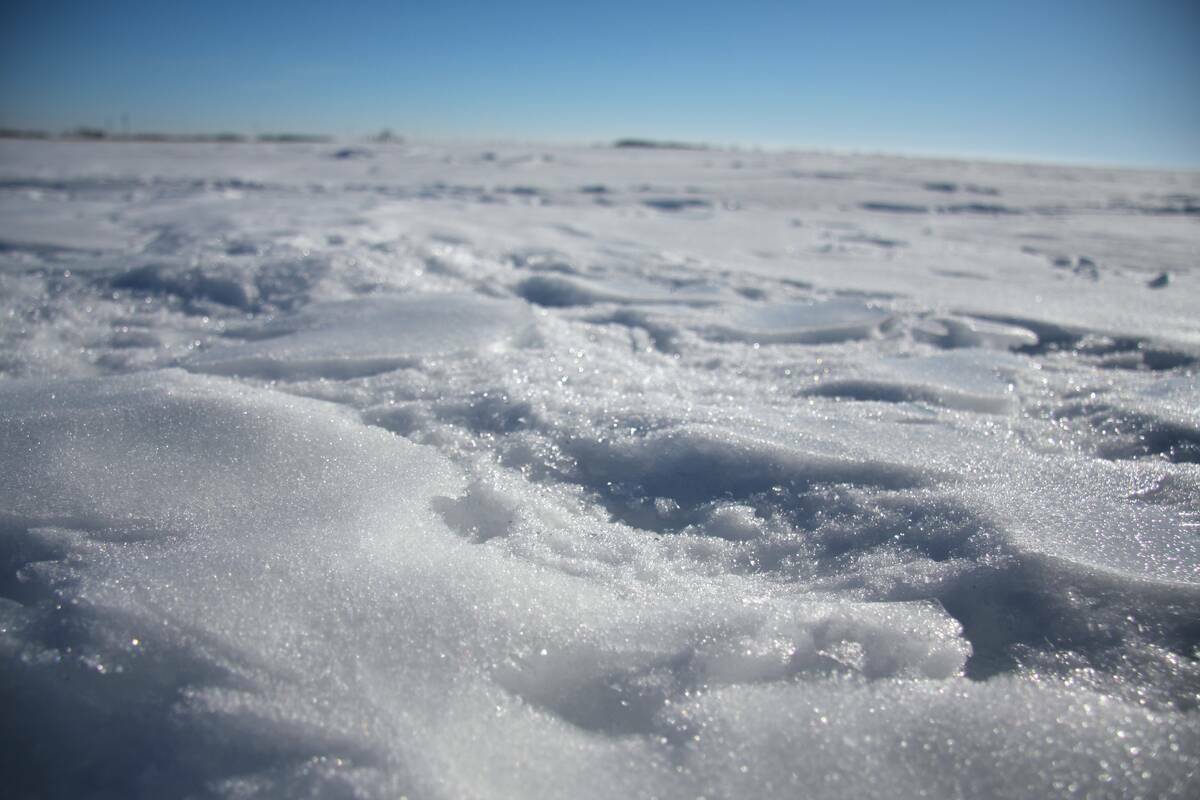
“We had a winter more like South Dakota, where they grow lots of winter wheat without snow,” said Hicks.
Driving by at 100 km/h, a field of orange tops flat on the ground might look ripe for spraying out and reseeding. But when attempting to determine if a winter wheat crop is a writeoff or not, he urged farmers to pull up some plants and look for the telltale white to greenish-yellow “thread of life” at the base of the stalk.
Black and mushy roots are a sure sign of death. But if it’s mainly white inside with a little brown around the edges, that means the plant has suffered limited injury from frost-induced dehydration — freezer burn.
Even so, the end result might be a respectable crop, even with 10 per cent thinned, 10 per cent damaged, and another 10 per cent dead.
“It might not be a bumper crop, but it still might fill in and yield more than spring wheat,” said Hicks.
At any rate, the early spring gives farmers plenty of time to reassess whether the crop is worth keeping. If by mid-April it still hasn’t bounced back, then it’s time to consider pulling the pin.
“I’ve held on to stands up until May 10, and only once had a winter wheat yield that was the same as a spring wheat yield,” said Hicks.