
New research from Alberta hopes to mitigate the risk of hailstorms and extreme heat to potato crops.
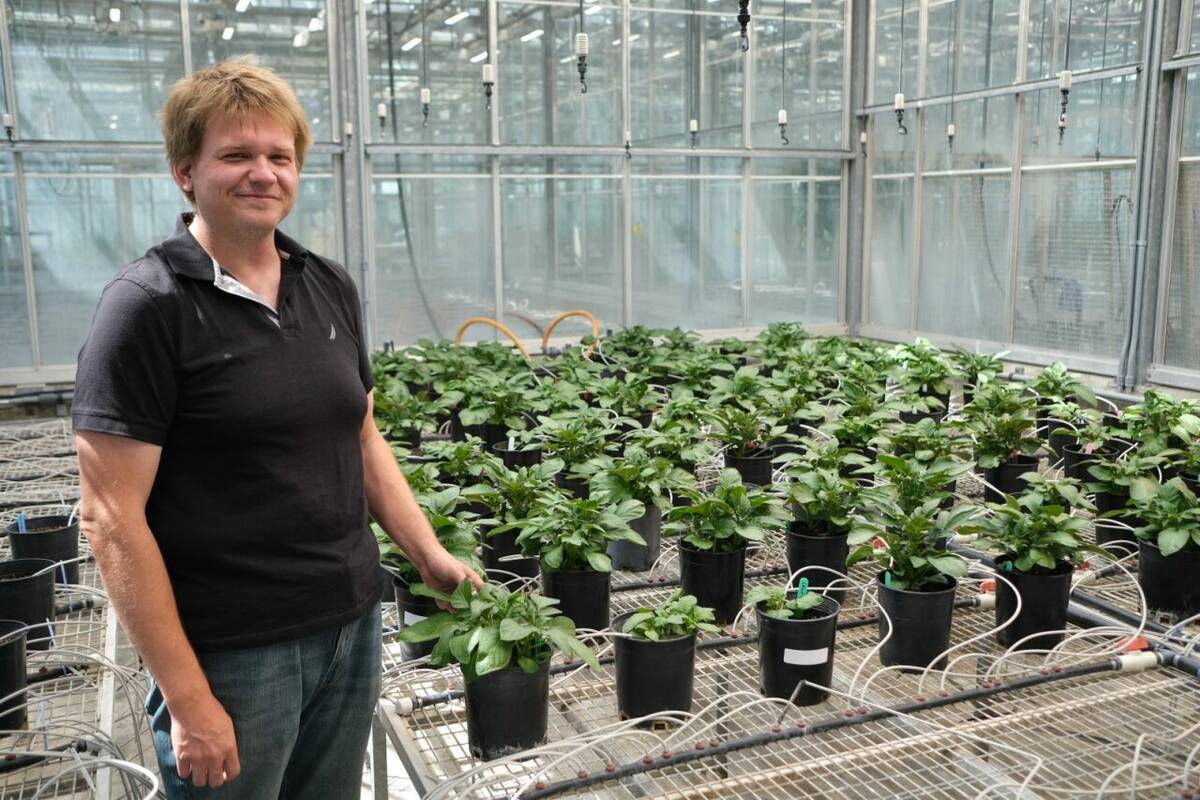
Jonathan Neilson, from Agriculture and Agri-Food Canada’s Lethbridge Research and Development Centre, said southern Alberta provides the perfect testing area.
WHY IT MATTERS: Increasingly extreme weather patterns in Alberta could put crops like potatoes at more risk for damage and loss of yields.
Read Also
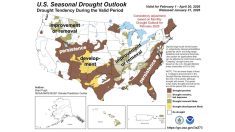
Prairie spring forecast: What weather models predict for March to May
Weather models offer varied outlooks for Prairie spring. This forecast review compares Old Farmer’s Almanac, NOAA, CFS, CanSIPS, and ECMWF predictions for March through May temperatures and precipitation.
“The frequency and intensity of hailstorms and severe wind is increasing, and Alberta is considered hail alley for Canada,” he said.
“The other thing that seems to be a trend that’s happening is that the timing of the events is going outside of what would normally be considered the season (peak activity occurring mid-June to early August). So we’re seeing hail earlier and then also later.”
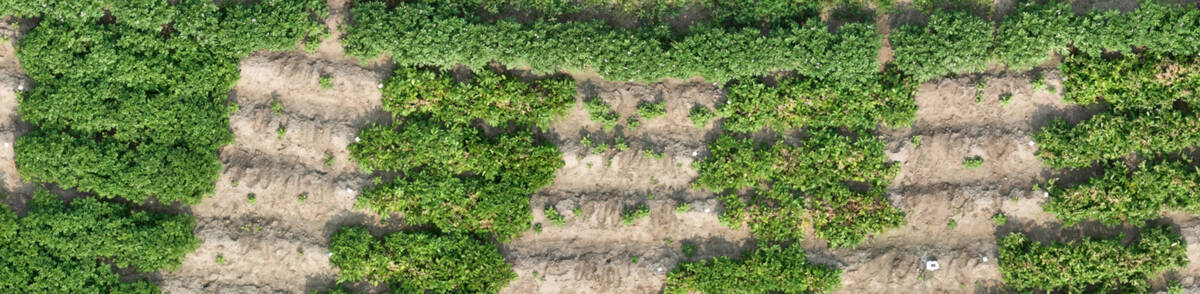
Neilson and his team have found that the timing of severe weather affects potatoes’ growth ability and quality.
A hailstorm before the tuber sets is unlikely to have much of an impact. However, a hailstorm of the same magnitude affects tuber size, shape and processing quality if it were to happen during tuber bulking.
Preliminary results from his ongoing study with heat domes is showing similar results.
The impacts of severe weather can also extend beyond the current growing season. Heat domes appear to affect tuber seed dormancy, which can have negative impacts on seed quality.
“When you get hit by stress, particularly if it happens before the potatoes have set, the plant has time to recover. They might be delayed a week or two, but they’re able to regrow the damaged tissue and not have any real lasting effects. If it happens late in the growing season, in terms of yield, there’s not as much effect, because the potato’s already been produced,” said Neilson.
“It’s that middle spot where you see the most impact. So around here, that would be in July-August, and that’s where you start seeing an impact on the total yield. You’ll see fewer tubers. You might get double sets. And then beyond the yield, it starts affecting the quality. In Canada, most of the potato growing here is destined for the processing market for french fries, chips, breakfast stuff. How the plant allocates carbon is really important. It’s an overall reflection on how much growth you get. So it could affect the size profile. You could get a mix of big potatoes and undersized, and that’s going to affect how much of your crop actually gets converted into whatever your end market is.”
Neilson said extreme heat is being seen more frequently as all-time temperature records continue to be broken.
However, it is not about how much the temperature spikes but if it remains elevated for a prolonged time.
Potatoes tend to like warmer days with cooler nights, with different parts of the plant having different thermal optimums. Depending on the temperature, it could favour root growth or shoot growth.
This year, Neilson did a greenhouse trial with heat domes at different parts of the growing season.
“We found if you got a lot of extreme heat later in the growing season, the potato tubers were coming out of the pots already sprouting. So we know that’s going to have effects on when they go into storage,” he said.
“It also potentially affects the seed industry because the seed is already going into storage, kind of ready to sprout. It’s going to have an impact on how that seed performs late.”
The research is now developing a risk-assessment tool. The hail/wind research is finished, an Excel spreadsheet has been built and there are plans to build a more robust tool in the future.
“You put in the developmental stage the plant was at, how badly you got hit and it will give you an estimate on what your potential losses could be. We’re looking at total yield, but we’re also looking to add some of these quality metrics on to it, and then also doing a similar thing looking at the heat domes,” said Neilson.
“We’re also looking at the use of biostimulants to try and offset some of these effects. We found … some sprays in controlled environments are known to increase growth and resistance to stress. When we apply those before we experience a simulated hailstorm, we’re able to lessen the negative impacts. The yields are higher, the sizes are larger.”
Researchers have also been working on ways to better assess the colour patterns of potatoes because heat stress moves carbons into the sugar pool instead of starch. When fried, the french fry can produce uneven burn/colour patterns, resulting in the potato being downgraded for less profit.
Neilson’s research is funded by the Results Driven Agriculture Research fund, Potato Growers of Alberta and the Alberta Potato Investment Fund.
“We need grower buy-in to translate what we are learning into actionable, useful things,” he said.