


Reading Time: < 1 minute Alberta Beef Producers and the Alberta Livestock and Meat Agency have put out a call for forage research proposals, with $1 million in funding available. “Forage is the key driver of Alberta’s cattle industry competitiveness, accounting for two-thirds of costs,” Alberta Beef Producers said in a statement. The priority research areas eligible for funding are: […] Read more

Funding for forage research
Call for forage research proposals with $1 million in funding available

Original Grazing School for Women event fast approaching
Registration deadline is June 1
Reading Time: < 1 minute This year’s Original Grazing School for Women includes farm tours, networking events, and sessions on the BSE Surveillance Program, plant identification, grazing in a changing climate, extending the grazing season, record-keeping technology, and a demo on electric fencing. It also includes trips to Luc Tellier Farm and the Iron River Elk Farm along with a […] Read more
Warmth seen as welcome relief for Manitoba forages
CNS Canada –– A recent wave of warm temperatures is just what’s needed to boost the development of forage crops in Manitoba, which have been slowed due to recent weather, according to two industry experts. “Just within the past week plants are starting to develop, we’re hoping that with the heat they’re forecasting, the crops […] Read more

Scorecard lets you put your pastures to the test
The scorecard is a simple way to see if a pasture needs to be rejuvenated
Reading Time: 2 minutes Highly productive pastures are the biggest key to high profitability of most beef, and other grazing ruminant operations. The Alberta Tame Pasture Scorecard is a quick and easy way of doing a pasture assessment. “Determining if pastures are functioning at the desired potential can be determined quite easily,” said Grant Lastiwka, a provincial forage and […] Read more

The big two irrigated crops seeing some competition
Forages and cereals still dominate irrigated acreage, but oilseeds and specialty crops are growing in popularity
Reading Time: 3 minutes Each year, Alberta Agriculture and Rural Development publishes a compilation of all 13 of the province’s irrigation districts’ data for the previous year. The latest figures show cereals and forages (pasture, hay and silage crops) still account for two-thirds of the 1,390,000 acres in the districts, but the trend is clear — forage production isn’t […] Read more

Silage varieties for Alberta cattle producers
Reading Time: < 1 minute This year’s version of Silage Varieties for Alberta is now available. Under the umbrella of the Agricultural Research and Extension Council of Alberta, eight applied research groups performed forage testing of various varieties at 12 locations throughout the province. This was the sixth year of tests. “Varieties of barley, oats, triticale and peas commonly used […] Read more
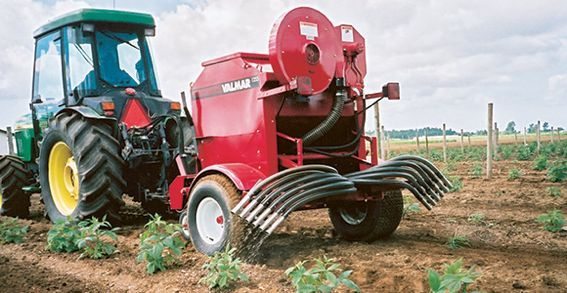
Salford to buy applicator maker Valmar
Prairie manufacturing firm Valmar Airflo, known for its farm-, commercial- and research-grade granular applicator systems, is under new ownership. Valmar, set up in 1977 at Elie, Man. by farm mechanic, crop duster and inventor Charlie Balmer, has been sold to Ontario seeding and tillage equipment firm Salford Group for an undisclosed sum. Valmar will continue […] Read more

Forage stands can be terminated in spring — if done right
Herbicide timing is key, and soil moisture and fertility must also be evaluated
Reading Time: 2 minutes Traditionally, forage stands are terminated in the fall so a good seedbed can be established and the sod root system has some time to decompose. However, hay stands can also be terminated in the spring. Producers just need to be aware of a number of factors that can impact success. “Spring termination of hay land […] Read more

Beekeepers bank on biodiversity in pasture lands
Canola is a great source of pollen and nectar — but only for one month of the year
Reading Time: 2 minutes As the Alberta countryside gets eaten up by field crops, pastures are becoming a “safe haven” for field crop pollinators. “Bees spend maybe a month sitting in a canola field, and in that month, they have adequate supplies of pollen and nectar from the canola,” said Adam Ovinge, a beekeeper from Granum. “The problem is […] Read more

Bale grazing and processing best at battling drought
A Peace Country study found bale grazing and processing is the best way to improve water retention and infiltration
Reading Time: 2 minutes Two up-and-coming grazing systems could help Alberta cattle producers combat drought. In a three-year study conducted by the Peace Country Beef and Forage Association, researchers found bale-grazing and bale-processing sites improve organic matter in the soil and increase the soil’s water-holding capacity more than other types of grazing system. “We’ve seen a lot of drought […] Read more
Cyber-Savvy Farmer
