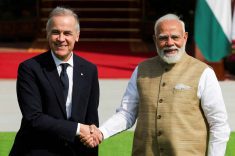

Glacier FarmMedia — Canadian pulse growers had reason to celebrate after Prime Minister Mark Carney’s visit to China from Jan. 14 to 16.
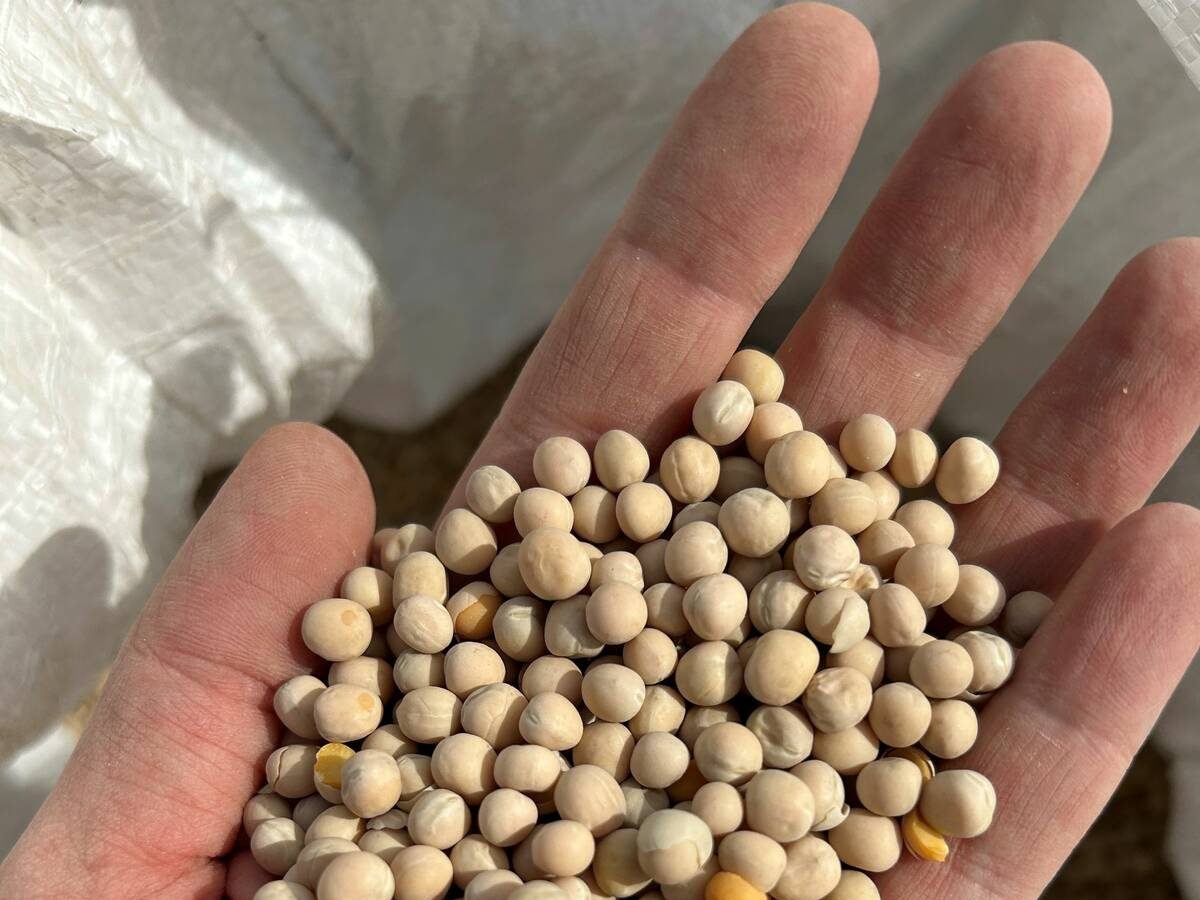
China announced Jan. 16 it was entirely dropping 100 per cent tariffs imposed last March on other Canadian agricultural imports, including yellow peas.
Greg Cherewyk, president of Pulse Canada, said seeing the duty removed from yellow peas brings a sense of relief to growers.
Read Also
Pulse Weekly: StatCan projects fewer pea and lentil acres
Statistics Canada projected fewer pea and lentil acres to be planted this spring in its initial 2026 planting estimates released on March 5.
“Canada’s been exporting to China for 30 years, and in the last 10 years, China’s become the largest importer of yellow peas in the world,” Cherewyk said. “To have been shut out of the largest market in the world … was pretty impactful for this industry.”
He also expects Canadian yellow pea shipments to China to resume immediately after the tariffs are lifted, adding that Canada typically exports 100,000 tonnes of yellow peas per month to China on average. However, Cherewyk warned there are many factors which can affect the amount, including demand from the animal feed, human food and pet food industries.
Despite the upcoming removal of China’s tariffs on Canadian yellow peas, India has been imposing a 30 per cent tariff on them since October. Pulse Canada is watching the Indian market closely as numerous factors including food prices, domestic production and politics can abruptly alter India’s trade strategy.
“We always have to be mindful of what’s happening in India. It’s a massive market, an important market for Canada,” he said. “With that being said, we are looking forward to free trade negotiations hopefully soon between Canada and India and hoping to get some predictability.”
Because of India’s tariffs, Pulse Canada has intensified its focus on adding new trade partners for Canadian pulses, with a priority on gaining footholds in the animal feed and pet food markets.
“We have been doing feeding trials throughout what we call the Indo-Pacific or Asia-Pacific, generating interest in that region. We’re doing that work now into Mexico, as well,” Cherewyk said.
“The diversification effort doesn’t stop with the lifting of the tariffs in China. We’ll continue to do that work because it’s still incredibly important that we have other outlets for our products so that we’re not so heavily reliant on a handful of markets in the world.”
Cherewyk added that Pulse Canada is looking to have lentil exports make inroads into the United States and European Union, while also promoting other crops under Pulse Canada’s umbrella.
“From peas to lentils to chickpeas and edible beans to faba beans, there’s work happening in food markets, pet food as well as animal feed,” he said.