
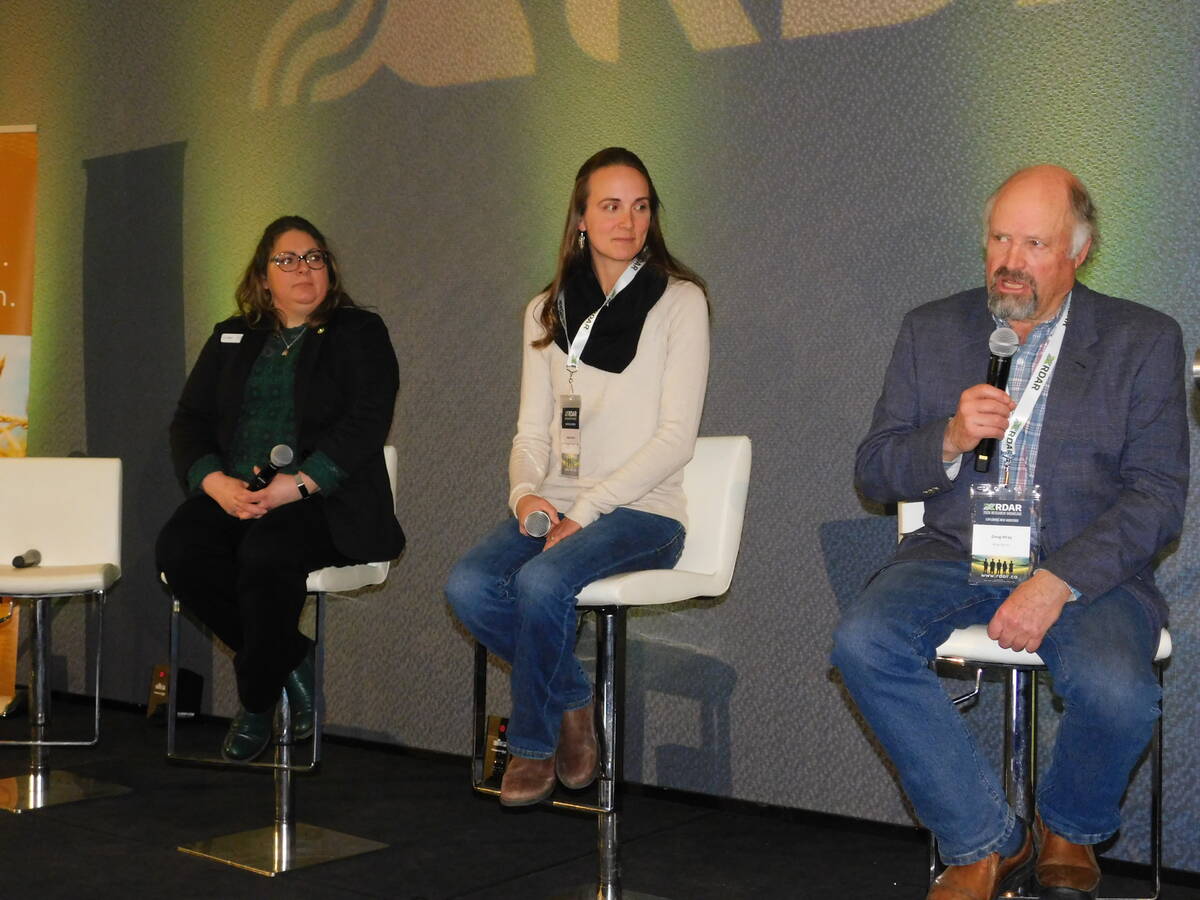
Producer-led research can be beneficial, and three producers talked about the benefits of on-farm research during the RDAR showcase in Edmonton on Jan. 21.
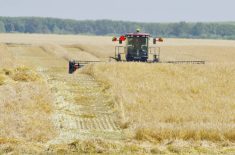
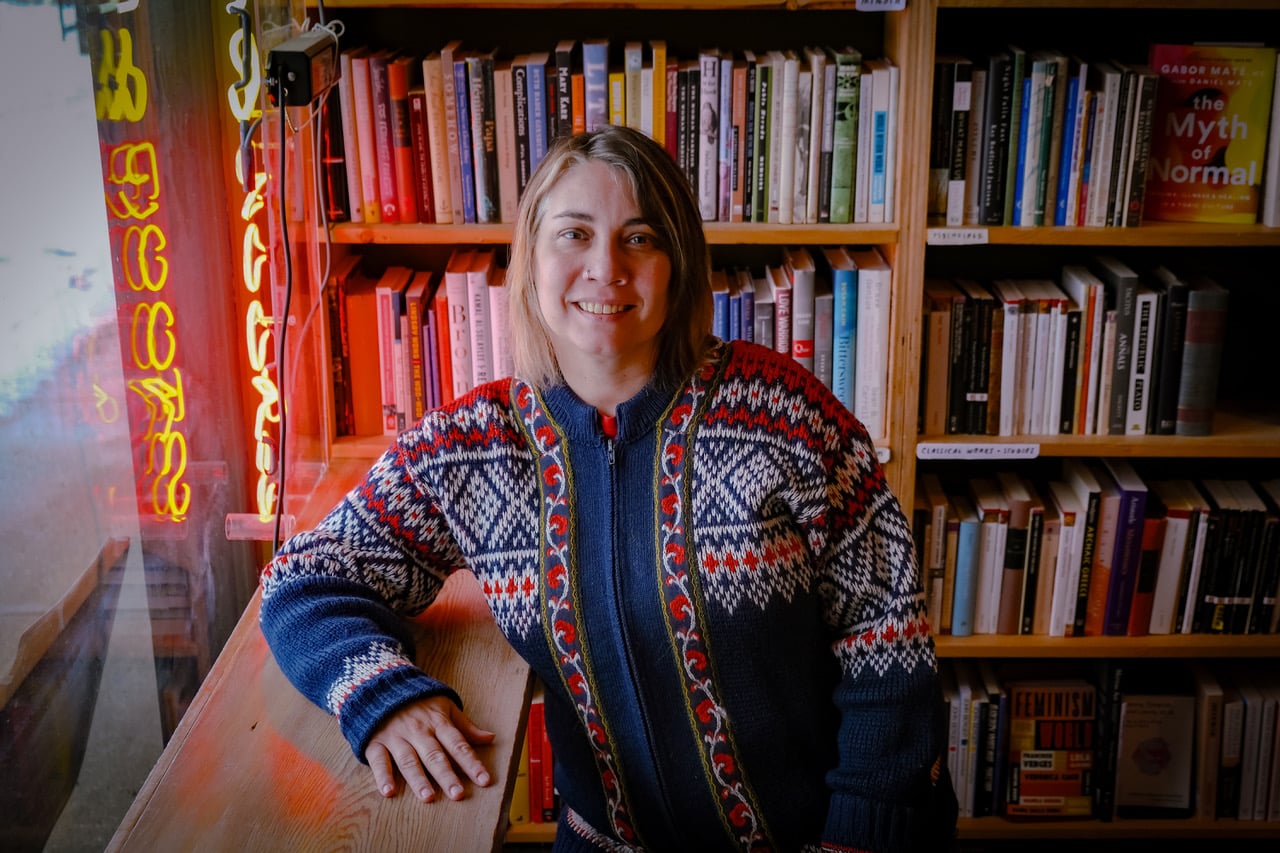
Tasha Alexander, who runs a grain farm with her husband in Brownvale, in the Peace Country, said having her own farm made it more enticing to put research into real world practice.
Alexander said she and her husband try to test anything they question, and they have participated in Plot2Farm through Alberta Grains.
Read Also
Closing the yield gap in Prairie cereals means balancing agronomy with economics
The yield gap in Prairie cereals is real, but researchers say the path to closing it runs through economics as much as agronomy.
“Sometimes our research is to not change anything, if nothing else is better. We’re very motivated because that’s how you can learn and grow and try new things that can be successful for your operation,” she said.
“I would say that most of the research that we do on our own ranch is just trial and error of our own,” said Angela Kumlin, who operates Lazy J Cattle Company with her husband, Matt, in the foothills half an hour west of Calgary.
“We have participated in privately funded trials before, but we really like producer-led trials. We just found privately led trials were more what the researchers were wanting to find out, as opposed to the ranchers and what is useful.”
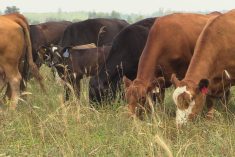
Doug Wray, a rancher from near Innisfail, Alta., runs a beef operation with cows, cow-calf and yearlings. He farms with his nephew, and they practice year-round grazing on their farm.
“Thinking about research and innovation, I think some might call us early adopters. We’re always looking for that next edge that’s out there to do things a little differently, a little better,” he said.
He added that margins are thin, so producers can’t make a lot of mistakes, and can’t take a lot of risk.
Wray spent the last 10 years trying to figure out soils to better understand carbon and soil health.
“We’ve done a lot of work with our livestock to try and make those cattle as well adapted to what we do, and we had to adapt to what they can do, so that we get as much efficiency and productivity there too,” he said.
Data collection
Data collection is an important part of research.
The Kumlins collect data based on how they plan to use it. They try to collect information that could be useful in 10 years, such as how much forage is harvested from an individual field each year.
“If we can see that number trend going up or going down, it tells us about the health of our pasture,” she said.
Alexander said it’s possible to collect too much data, but technology can help with data collection.
“I feel if I didn’t rely on digital field mapping and different programs, I would struggle to have the data,” said Alexander.
Collaboration
Alexander said the key for success in research is collaboration between researchers and producers.
“The more industry, producers and researchers are talking, the better the research can be. I think it’s important to consider who your funding partners are, and what their priorities are,” she said.
She appreciates that RDAR is producer-led with commission groups as funding partners. The long-term impact of research must translate to the field, she said.
“It can’t just be in a lab if it’s going to come down to benefit the producers at the field level.”