


Reading Time: 3 minutes If you want to raise more environmentally friendly cows, there are several things you can do, say experts. And make money from doing them. Over the last 30 years, the beef sector has improved efficiency by 15 per cent, but it can still do more to reduce methane emissions, said John Basarab, senior research scientist […] Read more

Producers can reduce carbon hoofprint while boosting profitability
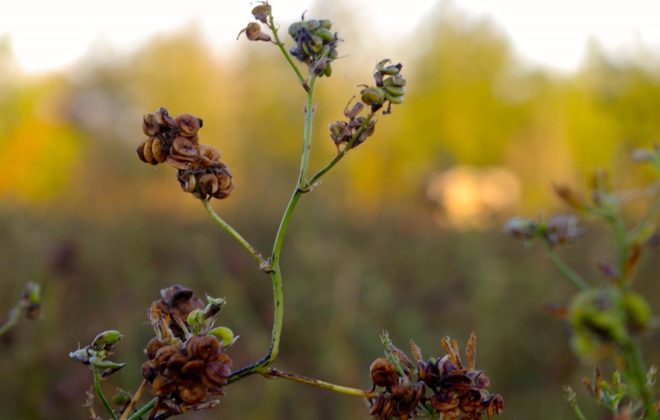
Don’t let those drought-stressed forages go to seed
You won’t get a lot of hay from that first cut but it gives you a chance of getting a second one
Reading Time: 2 minutes Determining the right time to cut a hay stand could mean the difference between harvesting a second cut or the stand becoming dormant, says a provincial forage and beef specialist. “A lack of sufficient moisture stresses plants, and that is certainly apparent this spring,” said Karin Lindquist. “Plants that do not get enough moisture are […] Read more

Beef web resource being preserved
Reading Time: < 1 minute Information that had been available on foragebeef.ca is gradually being added to beefresearch.ca. The Beef Cattle Research Council has been reviewing “hundreds of pages” of information that have been available on foragebeef.ca, an Alberta Agriculture website that the ministry is no longer able to maintain. The council is updating information before moving it over to […] Read more
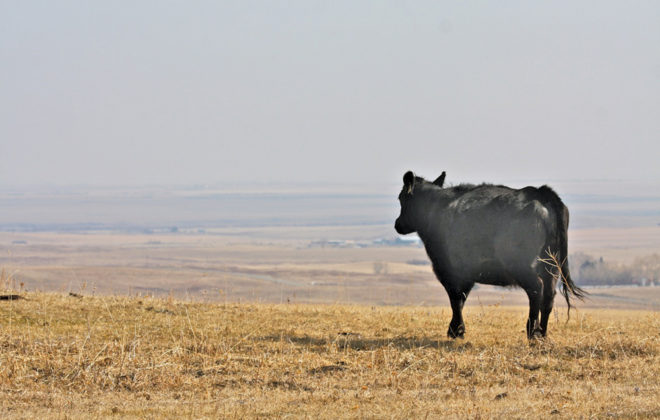
Double whammy: Second dry year hits forages hard
With pastures suffering and hay supplies tight and expensive, fallback strategies are needed
Reading Time: 3 minutes It’s already a tough situation for forages, and fears are mounting that it will get worse. “We went into the winter in very dry conditions. We have had some rains as of late, but with perennial forage crops, their production is pre-set from the year before,” said Ed Shaw, president and chief executive officer of […] Read more
The test results are back —so what do they mean?
Test results should drive a feeding program, but you need to know what the numbers signify
Reading Time: 2 minutes Interpreting forage test results can sometimes be like trying to read a foreign language. But there’s a new translation tool — the aptly named ‘A Tool for Evaluating Feed Test Results.’ “The tool is designed to take feed test results and compare them to basic nutrition rules of thumb for different classes of cattle,” said […] Read more

Five tips for grazing corn this winter
Corn grazing is becoming more popular across Canada because producers can grow more biomass on less land. If you are planning on grazing corn this winter, here are five tips to help you make the most of the corn grazing season:

Grazing hayfields is an option this fall
However, there are some factors to keep in mind and you need to introduce cows properly
Reading Time: 2 minutes Grazing hayfields this fall is an option for keeping livestock out as long as possible, says a provincial forage and beef specialist. “Most hay stands will have a significant amount of alfalfa in them,” said Karen Lindquist. “Higher-quality hay typically needs to have a legume component to provide sufficient protein and energy to meet animals’[...]
Read more
Read more

Drought’s effects linger on Prairies
CNS Canada — After a dry growing season last year in Western Canada, effects of the drought are still evident with news that most livestock producers won’t be doing a second cut of hay. “Pastures and hay fields didn’t get the moisture that they needed to really recharge over that winter period and get a[...]
Read more
Read more

Survey on forage production
Reading Time: < 1 minute The Alberta Forage Industry Network is asking producers to help it get a better understanding of forage production in the province. In addition to asking about your general location, type of farm, and forage acreage, the questionnaire asks about forage varieties, their uses, and any plans for expanding or decreasing acreage. The anonymous questionnaire takes[...]
Read more
Read more

Grass is your foundation, but great grazing doesn’t happen by itself
Irricana rancher Doug Wray intensively manages his five dozen paddocks and makes their health his top priority
Reading Time: 5 minutes After two decades of refining his grazing plan, Doug Wray knew long before the snow melted which of his 60 paddocks would be the first to see cows. The Irricana rancher also has a rough plan for all of his 2,000 acres of pasture for the rest of spring and into summer — but Mother[...]
Read more
Read more
Cyber-Savvy Farmer
