

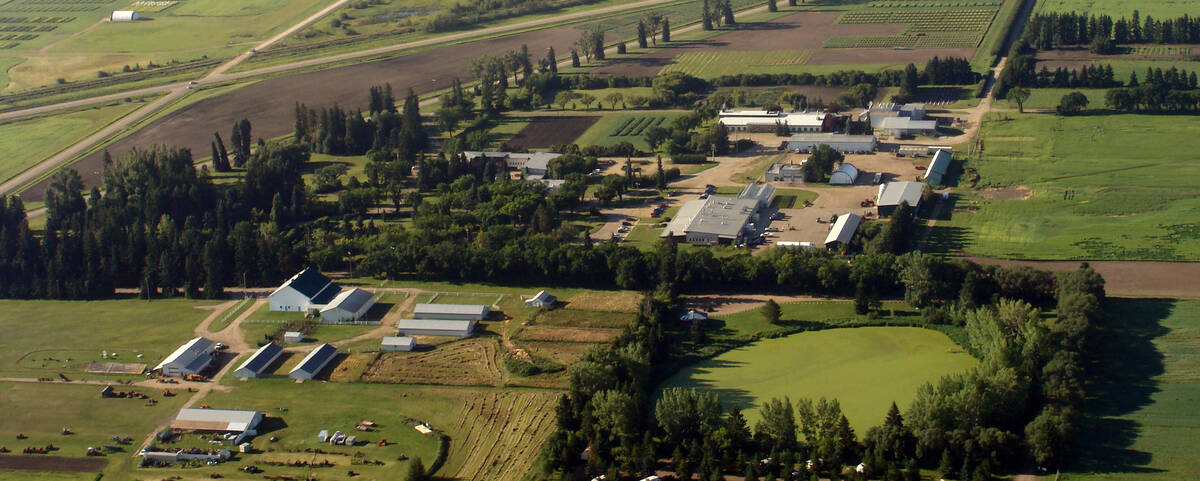
The cattle industry is mourning the loss of Agriculture Canada’s research centre in Lacombe, Alta., part of sweeping cuts to the department that were announced late last month.
“Everybody understood that the cuts would be coming because of the way things are, but what we’re disappointed in is that it appears as though the cuts were made without much consideration of industry priority,” said Reynold Bergen, science director with the Beef Cattle Research Council.
WHY IT MATTERS: The drastic cut to agricultural research will have a long-lasting impact on Canada’s ability to remain competitive in the global agriculture industry.
Read Also
Rodeo hall of fame inductee blowing out candles on celebrated cowboy life
Canadian Pro Rodeo Hall of Fame inductee’s family reflects on a fun and interesting southern Alberta life on and off the cowboy grounds.
“We weren’t consulted, but we were kind of expecting that the votes of confidence we have put in in the past based on past funding decisions or funding investments in these programs would indicate where our priorities are and those priorities don’t line up with the decisions that have been made here.”
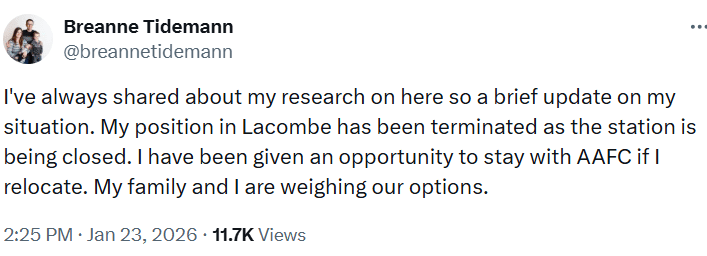
Breanne Tidemann, a weed scientist at Lacombe, wrote on X: “I’ve always shared about my research on here so a brief update on my situation. My position in Lacombe has been terminated as the station is being closed. I have been given an opportunity to stay with AAFC if I relocate. My family and I are weighing our options.”
There are no imminent site closures and the wind-down of scientific operations could take up to 12 months, said the department.
Bergen said the news has caused uncertainty.
“We don’t totally know what the impact is going to be on cattle or beef or forage research because we don’t know which researchers have been eliminated and might be relocated to other sites,” he said.
“It’s going to be some mix of both, but we don’t know how many and we don’t know who.”
Lacombe County said in a social media post that it was deeply disappointed with the federal government’s decision to close the centre, which has been in operation for 50 years, and called on Ottawa to pause the move.
The county said more than 100 centre employees and their families have been affected by the closure, as well as industry partners.
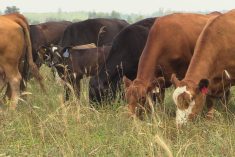
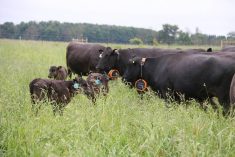
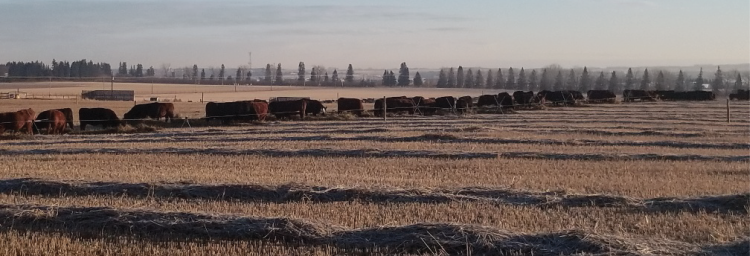
Lacombe was a major site for cow-calf forage and grazing research, as well as meat science, grading research and food safety.
“This is going to be a big loss. We just don’t exactly know what is being lost yet,” said Bergen.
The loss of Lacombe will be a hit to the industry, but the Quebec City research station will be also be a loss because it has been the site of extensive forage breeding.
“Quebec’s a long way away, but the varieties they develop there go all across the country,” he said.
Bergen said time will tell how the closure of the research stations will affect agriculture across Canada.
“The insidious part about cutting research is that it’s like a long hose. Think of water running out of a long hose, and you shut the tap off. Water keeps running until it doesn’t. With research, there’s such a long fuse on research that it might be 20 years before you start to wonder, ‘Well, how come nothing’s improving here?’ And it’s because of the cuts that were made so long ago.”
Ken Coles, executive director of Farming Smarter, called the Lacombe closure a “catastrophe.”
“I think it’s a shame and disgrace as a country that we’re not supporting one of the foundations of our country in an appropriate manner that will keep the industry competitive and vibrant on the world stage.”