


Commerce City, Colo. | Reuters –– A long-simmering debate in the U.S. West over an imperiled ground-dwelling bird reached a climax on Tuesday when the Obama administration announced it was denying Endangered Species Act protection to the greater sage grouse. U.S. Interior Secretary Sally Jewell touted the decision as a success enabled by a sweeping […] Read more

Sage grouse denied U.S. endangered species status

Yukon to help cover livestock vets’ travel costs
The Yukon government has launched a pilot program to help cover veterinarians’ travel and service expenses for farm calls. The territory government on Tuesday announced it will accept up to 30 farmers for the pilot of the Veterinary Services Program, running from now to the end of March 2016. The program will reimburse participating veterinarians […] Read more

College farm completes Environmental Farm Plan
Reading Time: < 1 minute Lakeland College is the first post- secondary institution in Alberta to complete an Environmental Farm Plan (EFP). From January to April, about 50 second-year students in animal science technology, crop technology, and other programs worked together to complete the EFP on the college’s student-managed farm at the Vermilion campus. The experience enabled the students to […] Read more

El Nino to strengthen in winter, gradually weaken in spring
New York | Reuters — A U.S. government weather forecaster on Thursday said El Nino conditions would gradually weaken through the Northern Hemisphere spring after peaking in late fall or early winter. The National Weather Service’s Climate Prediction Center said the likelihood that El Nino conditions would persist through the Northern Hemisphere winter was about […] Read more

We need a better approach to dealing with wildlife
Beef 911: Farming has created a great environment for wildlife but farmers are paying a steep price for the damage it causes
Reading Time: 4 minutes There have been many articles on the escalating conflict between wildlife and agriculture (both livestock and grain production) in certain areas of Canada. Our governments are struggling as to what to do and the most recent survey on wildlife damage by Alberta Beef Producers and the Miistakis Institute shows a high percentage of farmers impacted […] Read more

Canada losing bluetongue-free status
New findings of bluetongue in cattle in Canada — outside the one area of the country where the virus previously gained a toehold — have trading partners shutting their ports to Canadian livestock genetics and animals. Three cattle from one farm in southwestern Ontario’s Chatham-Kent municipality have now tested positive for bluetongue serotype 13 — […] Read more
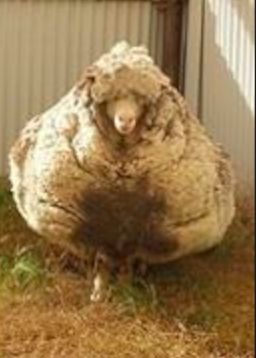
Australian sheep unofficially world’s woolliest
Sydney | Reuters — Around 40 kilograms (88 lbs.) of wool has been sheared from a sheep found near Australia’s capital, the RSPCA said Thursday, making him unofficially the world’s woolliest. The animal, named Chris by his rescuers, was discovered on the northern outskirts of Canberra on Wednesday and was said to be struggling to […] Read more

Want to kick up your management skills a notch?
Reading Time: < 1 minute Producers who want to take their management skills to the next level are being encouraged to apply for the second annual Robert (Bob) L. Ross scholarship program. Ross, a dairy producer from St. Marys, Ont. who died in 2014, was an influential advocate for business management training and a mentor to farmers across the country […] Read more

Cattle herd still shrinking in StatsCan estimates
The size of Canada’s cattle herd is still in decline and almost a quarter smaller than its peak in 2005, Statistics Canada reports. The federal statistics agency on Thursday released estimates showing the herd at 13 million cattle on farms on July 1 this year, down 2.1 per cent from the same date in 2014. […] Read more

Dry means extra dangers for grazing livestock
Water hemlock and blue-green algae are two killers that pose an increased risk in dry, hot years
Reading Time: 2 minutes Dried-up sloughs and waterways mean cattle can graze things they normally wouldn’t. And that can be deadly. Water hemlock — something cattle wouldn’t normally eat — is one of the dangers. Its leaves and stems are toxic, but the root is especially dangerous, with a marble-sized piece enough to kill a cow. “Water hemlock is […] Read more